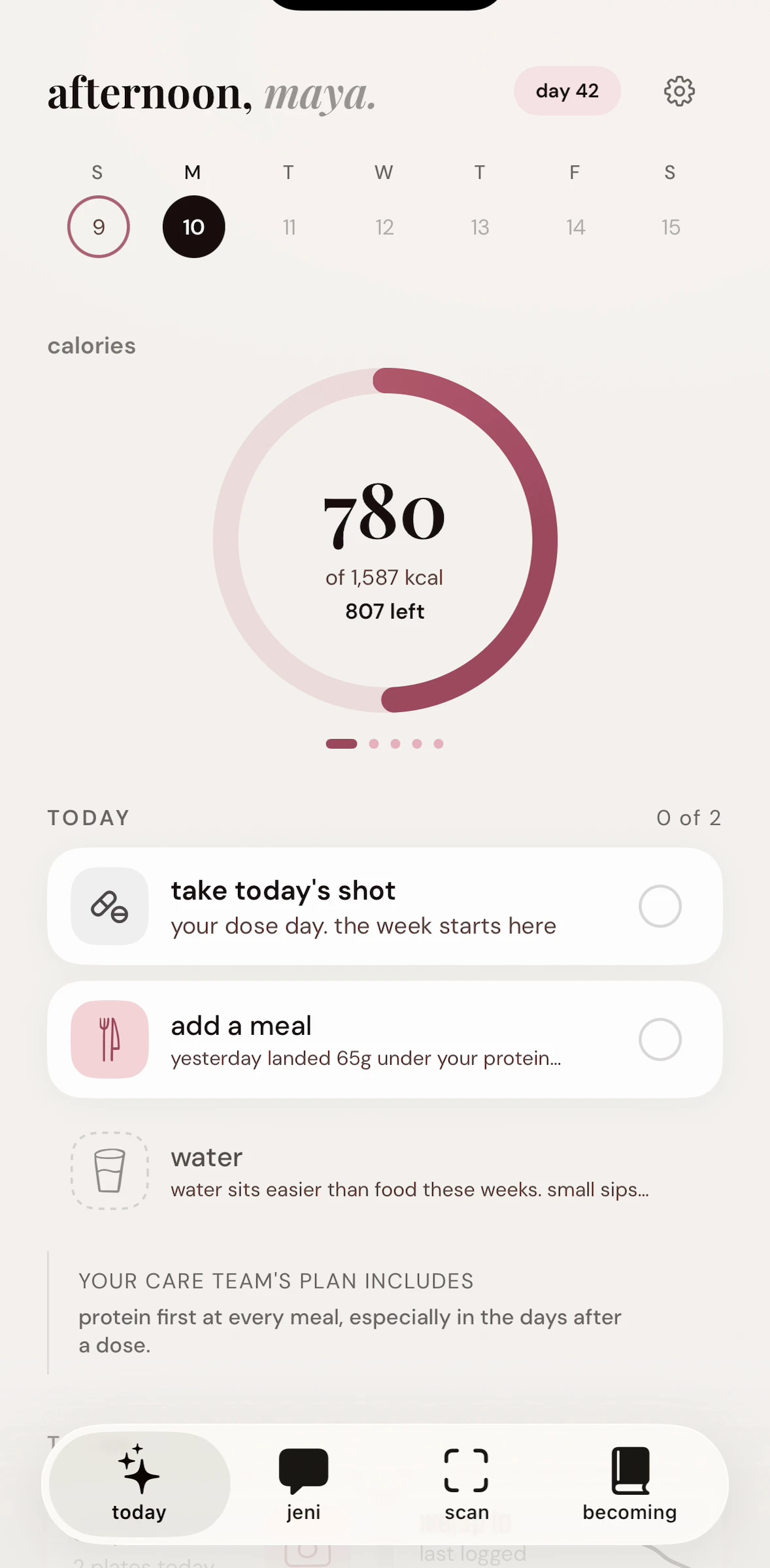
The patient's Today screen: the day's dose, a meal to add, water, and the clinic's standing instruction underneath
03The patient side

What lands on your patient’s phone.

This page is for the person deciding whether to put a practice’s name on a program. Everything below is what their patient actually receives, because a program a patient finds tiring is a program nobody answers, and one nobody answers is worth nothing to anybody.

The first evening

A code, and then their own day.

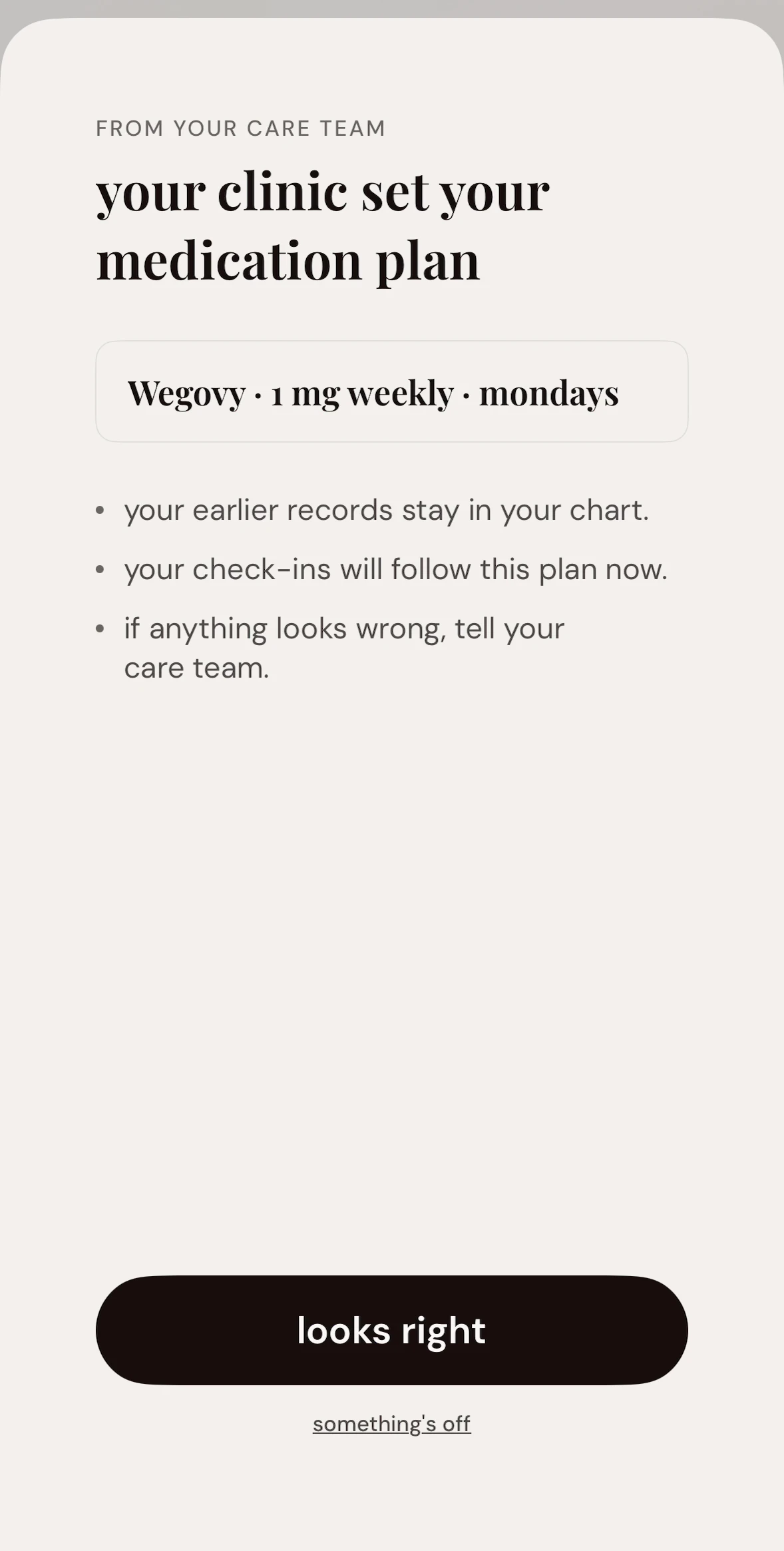
The plan a clinic recorded, arriving on the patient's phone with two answers: looks right, or something's off
What the plan looks like when it lands. Two answers, and the second one is the useful one.

A patient leaves an appointment holding more instruction than anyone retains, and the stretch between that evening and the next appointment is where the program is either real or theoretical.

That evening they enter the one-time code you handed them and choose, scope by scope, what your clinic may see. The plan you recorded is then on their phone: the medication, the day it falls on, and your instruction sitting underneath it, attributed to your clinic, and read-only, because it is yours and not theirs to edit.

Nothing to install for your staffNo portal, no account for anyone at the practice to administer, and no list of your patients leaving the building.
Their earlier records stayPatients arrive already medicated and clinics adopt Jeni around them. What they were tracking before the code is still theirs; nothing is overwritten by your plan arriving.
The reconciliation is theirs to makeThe plan you recorded arrives for them to confirm against what they have actually been doing. Where it does not match, they say so, and that lands back on your morning list.
The day

Taps, not a form.

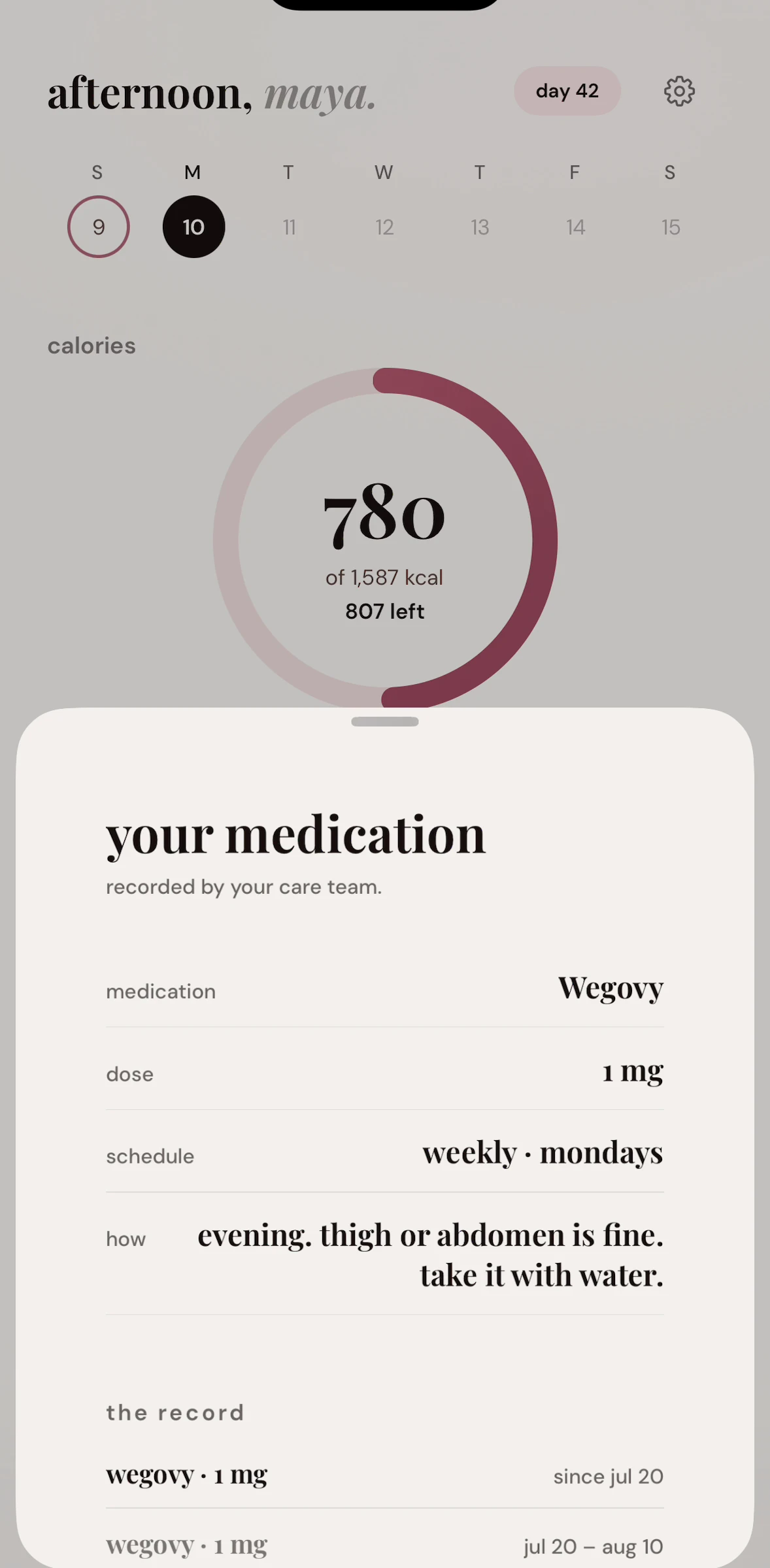
The patient's read-only view of their medication plan, with the dated record of it underneath
Their side of the plan: a card with a dated history, not a form.

Jeni is the patient’s own weight-management app, and your plan sits inside a day it already runs. That is the whole reason this can work: nobody sustains a clinical questionnaire for a year, and everybody keeps using an app they already opened.

Meals from a photographLogged from a picture rather than typed into a form, which is the difference between a habit that survives a busy week and one that does not.
The dose, on the day it fallsMarked taken when it is taken. A scheduled day with no mark is carried through to your page as unrecorded, never as skipped.
How the meals satQueasy, heavy, food noise: a tap, not a paragraph, and structured so that week eleven can be compared with week two.
No wearable requiredIf a patient wants to connect one, fine. Nothing depends on it. Programs that require hardware quietly exclude the patients who need them most.
What it never does

The restraint is the feature.

People who have been sold weight products before arrive with good reasons to distrust one. Most of what follows is about not spending that trust.

No streaks, badges or scoresNothing that turns a therapy into a game a person can be losing at. The metric a program optimizes is the behavior it produces, and streaks produce dishonest answers.
No daily weigh-in demandsWeight is asked for at the rhythm the plan sets, or if your clinic has not set one, at whatever the patient chose. Nobody is prompted every morning to stand on a scale by a piece of software.
Nothing sold to them, everNo supplements, no advertising, no upsells, no third-party offers. Their phone is not a channel and your panel is not an audience.
No advice in your nameJeni does not answer clinical questions, and there is no channel that could send your patient anything you did not write. If they need an answer, they contact your practice the way they already do, which is also what the app tells them.
What the patient controls

Their record, and who has read it.

Consent here is not a checkbox at signup. It is a set of standing permissions the patient can inspect and withdraw, and the product is built so that they can always see what their clinic saw.

Access is scoped, and datedAssigning care, daily records and the visit packet are three separate permissions, each held from a stated date forward, so a clinic sees the window the patient allowed and no further back. Today the code path grants the three together; asking for them one at a time is on the list to close before a first real patient. It is stated here rather than left for you to find.
They see the same audit trail you doEvery open and every change is recorded, and the patient's copy of that list is not a redacted one. A clinic reading a record is an event the patient can see.
They can file a correctionIf the plan on file is not what they are actually taking, they say so, and it arrives at the top of your morning list as the thing asking for you, with the mismatch named.
They can end it, from their phoneImmediately, without asking anyone at the practice, and without losing their own record.
Whose program it is

It carries your name, not ours.

The plan belongs to the practice. It is recorded by a clinician at the practice, it reaches the patient with that attribution, and the instruction they read is one someone at your clinic wrote. A patient who has a good month attributes it to their doctor, which is correct: the pathway is theirs.

The relationship is yours; we only run it. That distinction is worth being pedantic about, because every company that has quietly crossed it ended up competing with the practices it sold to.

Talk to us

A year of this is a different record.

If you would want your own patients on something built this way, twenty minutes with the person who built it is the next step, and the demo clinic is open in the meantime.